September ushers in true fall weather in the area, which can often seem more like winter to some. This time of year tends to cause anxiety among visitors, especially those from warmer climates. People have been known to cancel trips, despite having thousands of dollars invested in nonrefundable airline tickets, lodgings, and tours. But what is fall really like here? Are such fears warranted?
Changing weather
Although temperatures can get chilly overnight even in July and August, starting in September the weather starts to get serious about the cold. Temperatures routinely will drop to near or below freezing in the early morning hours, and highs start to rarely hit 70°F (21°C).
Along with the lower temperatures comes increasing chances of precipitation… rain, sleet, hail, and even snow. Snowfalls typically are short-lived, lingering mostly at higher elevations and even then not for long. Later in September and into October, snows come more frequently and stay longer. Snow on the mountain tops will eventually stick around for good, and won’t fully disappear again until August.
Until late October, inclement weather is likely to be short-lived. Rains come and go, snow falls but melts quickly, temperatures warm up during the day.
Dress for the weather
You should be ready for any kind of weather at all times in Yellowstone, but it’s easy to ignore this rule without consequence in the summer. Fall is a bad time to venture out unprepared.
If you plan to hike, wear or bring layers, and have rain gear in your pack. Have a hat and gloves handy. Wear sturdy shoes or (preferably) boots, with wool socks. Make sure you’re either wearing your rain pants from the start, or that you have rain pants that you can put on without taking off your boots. Taking off your boots in the middle of a squall is pretty unpleasant, and can lead to wet feet and blisters.
Even if you don’t plan to hike, some walking is required for visiting thermal features such as Old Faithful or Grand Prismatic. It’s tempting not to carry everything, since you don’t plan on being out for long, but rain can come out of nowhere, and being soaked in the fall is no fun at all.
Plan for limited amenities
Some things will start to shut down, starting in early September for some and accelerating later in October. For example, Roosevelt Lodge will close in early September. Lodgings, dining, campgrounds, visitor centers, gift shops, and even gas stations and auto repair shops inside the park will be less and less available as fall progresses.
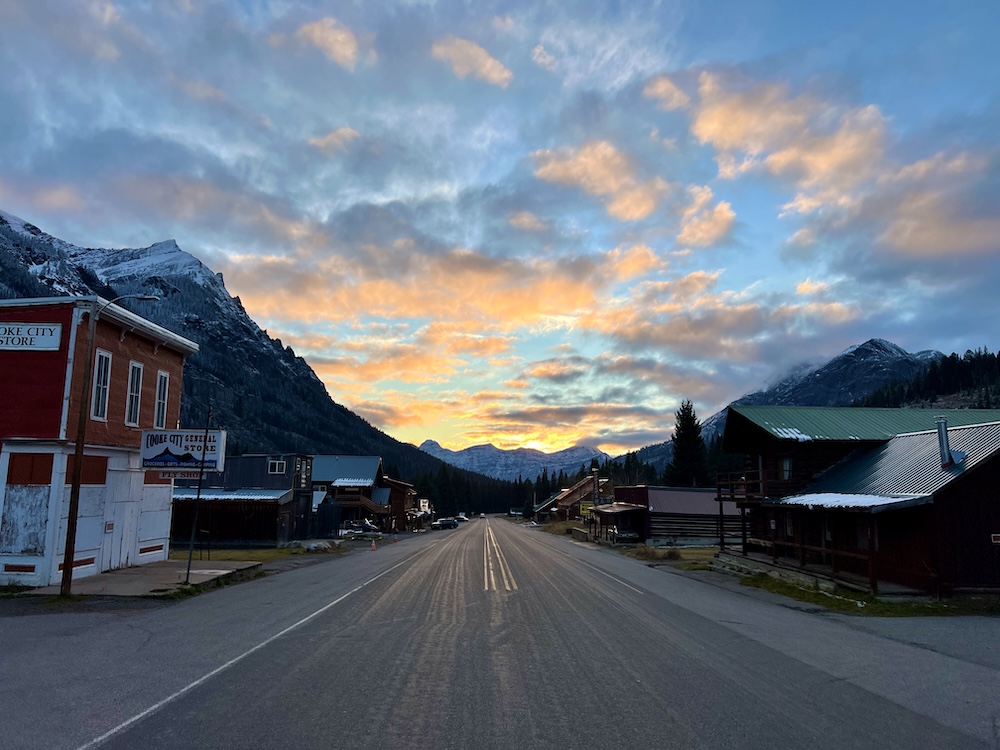
Outside the park, the same thing begins to happen. Shops and restaurants may close for “shoulder season” (the time between the busy seasons, which for some border towns are summer and winter). Big Sky, for example, gets quite sleepy between the resort closing for summer in mid-September and when it opens again for the ski season in late November. Cooke City and Silver Gate get similarly quiet after the Beartooth Highway closes, but before there’s enough snow for winter activities.
Be ready to change your plans
When snow falls, there may be some temporary road closures. Many people visiting Yellowstone don’t have experience driving in snow, and are likely to be in rental vehicles with bad summer tires, so the park errs on the side of caution to prevent accidents.
Think about what you’ll want to do if you can’t get into the park one of the days you’ll be here. Maybe explore whatever town you’re staying in. Find a tourist attraction like a museum, a visitor center, West Yellowstone’s Grizzly and Wolf Discovery Center, etc. Gear up and go on a walk in or near town. Go on a scenic drive outside the park, if the snow didn’t fall where you are. Or even go hang out in a bar or coffee shop and chat with locals or other visitors.
Later in October, if a particularly heavy snow falls, roads may end up closing early for the season. If this happens, you’re out of luck unless you’re in the northern part of the park. The road from Mammoth to Cooke City is open year-round, so it shouldn’t close for long. However, please do be cautious, especially if you don’t have experience driving in snow and/or are in a rental car.
If you do end up unable to get into the park, there are plenty of places to explore outside the park. Find a visitor center and ask for suggestions.
Why should I visit in fall?
Everything above may sound discouraging. It’s not meant to – it’s meant to ensure you’re prepared – but it’s fair to ask what the reward is for visiting in the fall.
One obvious reason is the fall color. Although we don’t get the same kind of color change as the east coast does, due to the high number of evergreens, we do get some. Aspens turn gold, willows (different from the weeping willows of the east coast) turn deep red, and some of the native grasses turn red. Cottonwoods and other deciduous trees along rivers and lakes will change colors as well.
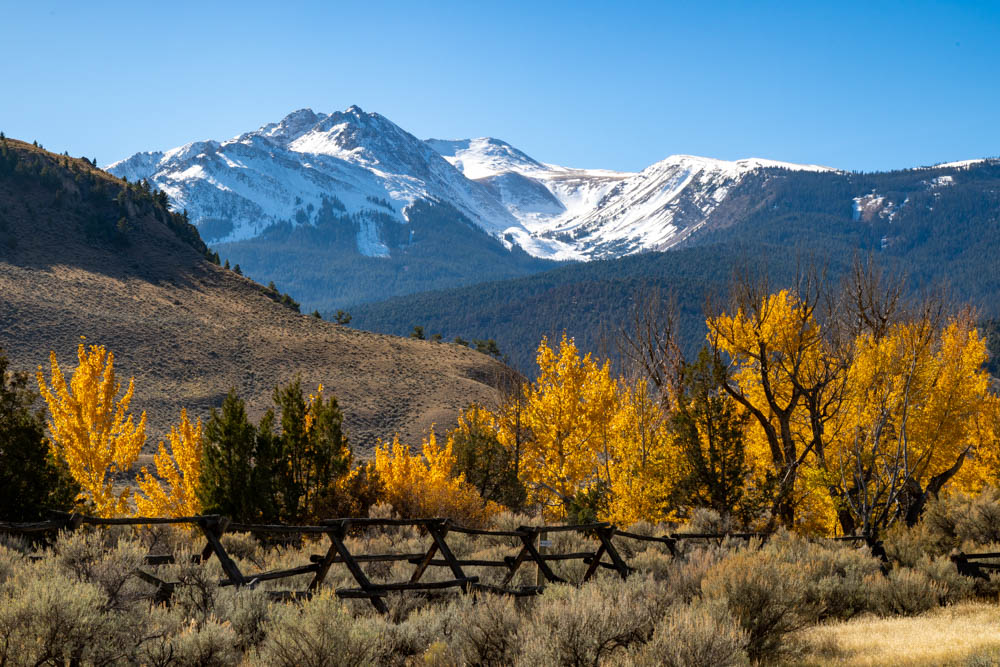
Snow at high elevations also adds character to the mountains. In early September, the mountains are bare and, to some degree, boring. When the snow starts to fall on the mountain tops, it adds a lot of interest to the scenery.
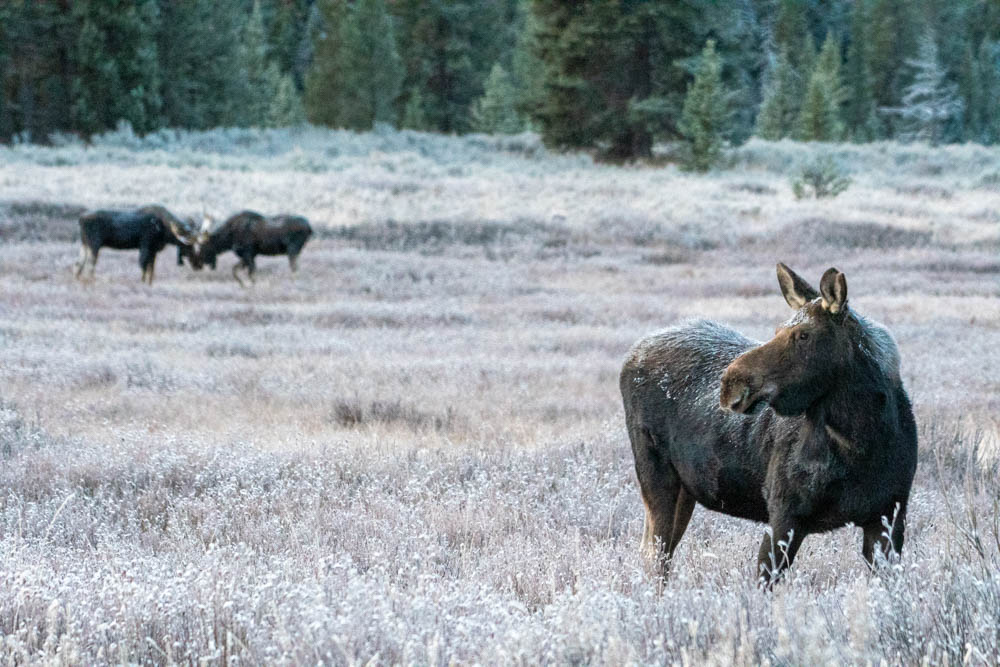
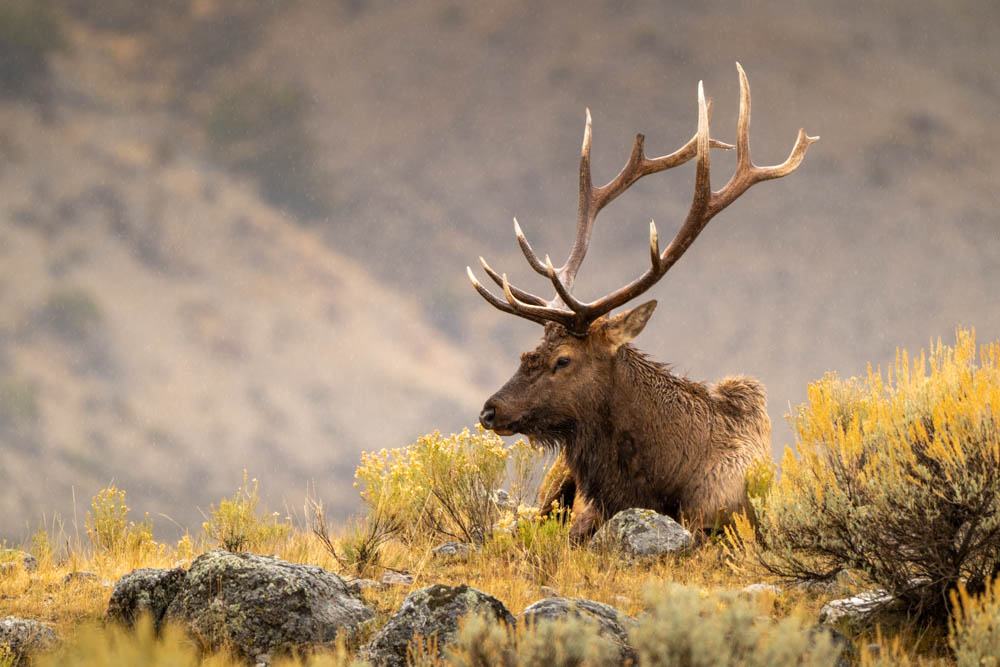
Fall is also the rut (mating season) for many ungulates. Elk are start their rut in September, with activity declining in early October. Moose rut tends to be in October, while bighorn sheep have their rut in late October into November. This means animals will be much more active, and may be more visible. You may be able to witness some fights, with male elk and moose engaging in pushing matches with their antlers and bighorns butting heads. Also, antlered animals, like elk and moose, will have their full rack of antlers, while earlier in the season the antlers are still growing or even, in spring, missing entirely.
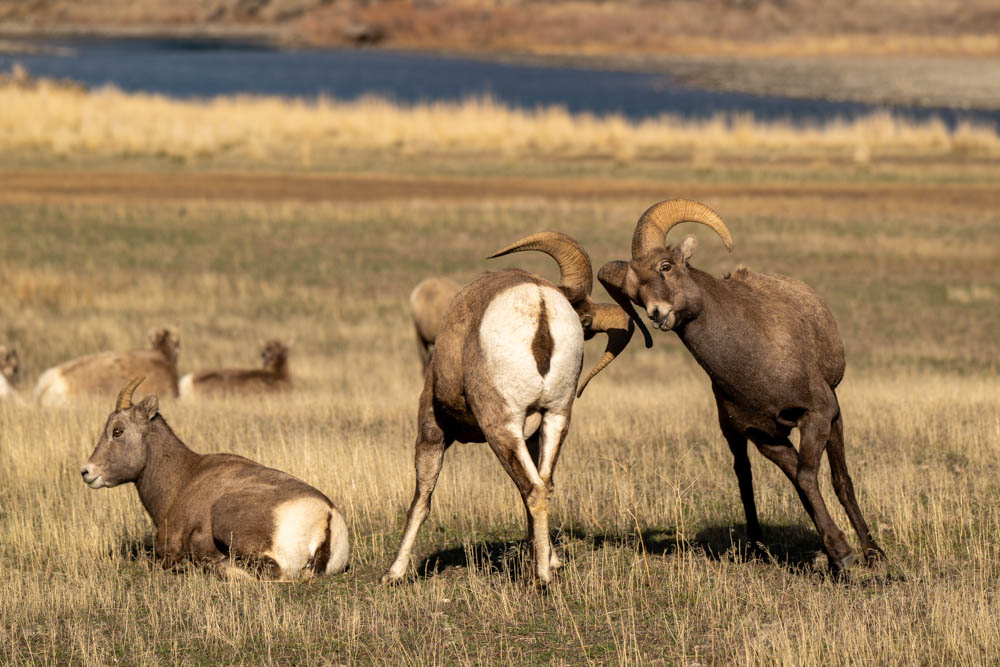
These animals also respond to the changing temperatures by moving into different areas. Elk move to lower elevations, often gathering in Mammoth inside the park. They will move down closer to Gardiner as it gets colder and snow deepens. Moose will also move to lower elevation, but being more temperature sensitive, they will stay in the park, at higher elevations than the elk. Bighorns also move to lower elevations, such as areas around Gardiner, during their rut and stay there through the winter.
Fall is a great time to visit!
All in all, fall is a wonderful time to be in Yellowstone. Crowds decline significantly later in fall, animal activity is back up after the lazy heat of summer, the mountains start to wear their snowy caps, scenery is beautiful, and temperatures are wonderful for hiking.

Leave a Reply