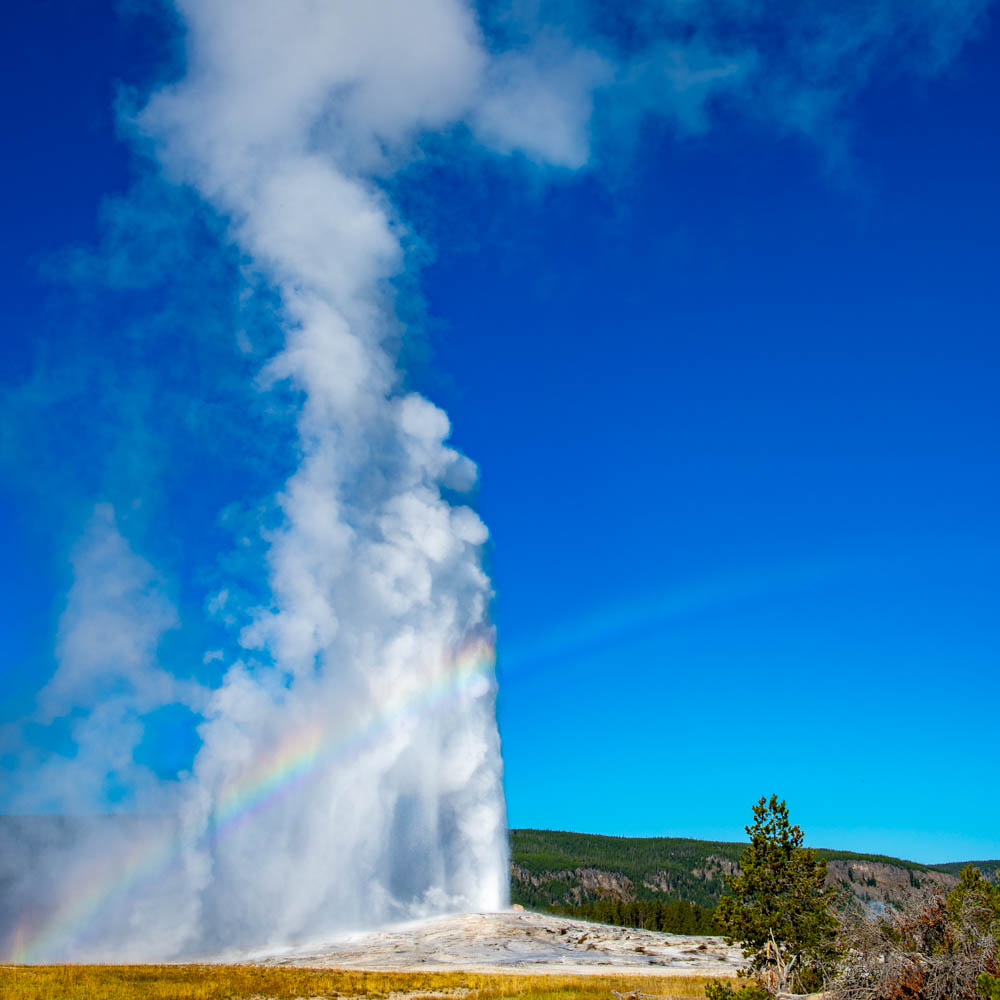
Biscuit Basin, one of Yellowstone’s thermal areas, hit the news back in summer of 2024 when it suddenly exploded. It has remained closed since that time, but is now back in the news following a new hydrothermal explosion that opened multiple new vents, and a new pool that suddenly appeared afterwards.
I’ve heard a few folks expressing fear about visiting Yellowstone in the wake of the latest event. They all wanted to know, is there a good reason to be afraid? The short answer is no. For the reasons why, read on.
History of Biscuit Basin
Biscuit Basin got its name from nodules of silica in the shape of biscuits that were found in some of the pools. This silica was dissolved in the hot water, and it precipitated around the edges over many years to form what is called geyserite.
It was first visited very early in the history of the park, and it is known that two of today’s pools – Black Diamond Pool and Black Opal Pool, the first pools you would have seen after crossing the bridge over the Firehole river prior to the basin’s closing – did not exist prior to the 1900s. What is Black Diamond Pool today formed through a series of hydrothermal explosions between 1902 and 1931. Black Opal Pool was formed through hydrothermal explosions that flung sand and rock in 1934, and explosions continued off and on until 1953.
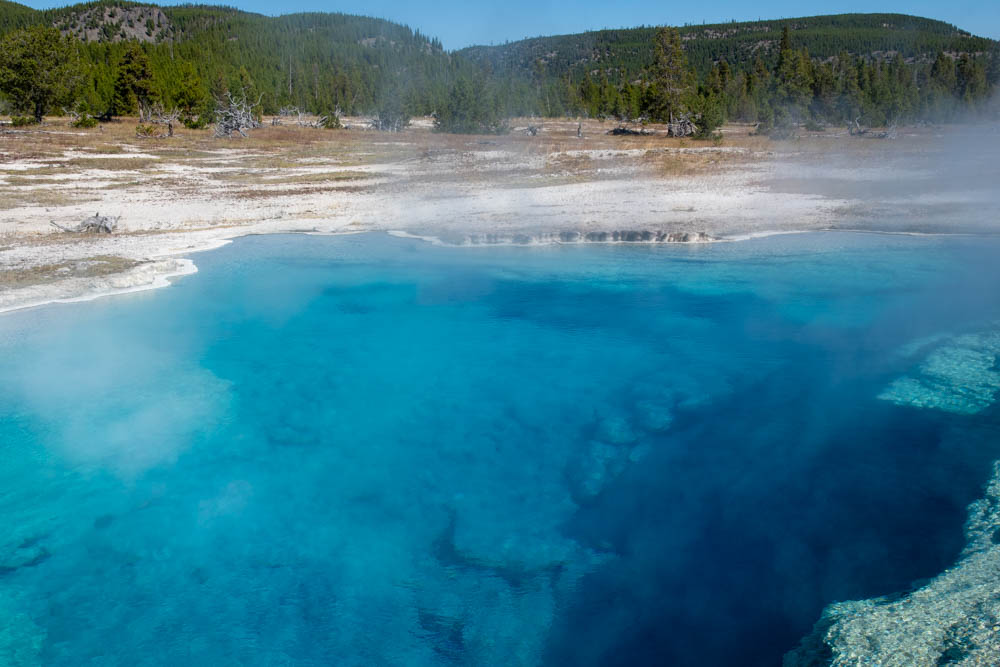
In 1959, the Hebgen Lake earthquake, which was measured at a magnitude of 7.2, rocked the area, including Yellowstone, causing many geysers to erupt, and changing many of their behaviors afterwards. Sapphire Pool, home to the best example of the geyserite “biscuits” the basin was named for, experienced a series of significant eruptions following the quake. These eruptions were so severe, they destroyed all the “biscuits.” Today, Sapphire pool no longer erupts.
Activity started ramping up in the area again in 2005, and following a small earthquake in 2006, Black Diamond erupted several times, spewing out mud and rocks more than 80 feet high.
All in all, the recent events in Biscuit Basin are far from unprecedented. The area has been turbulent off and on throughout the history of Yellowstone.
Recent events in Biscuit Basin
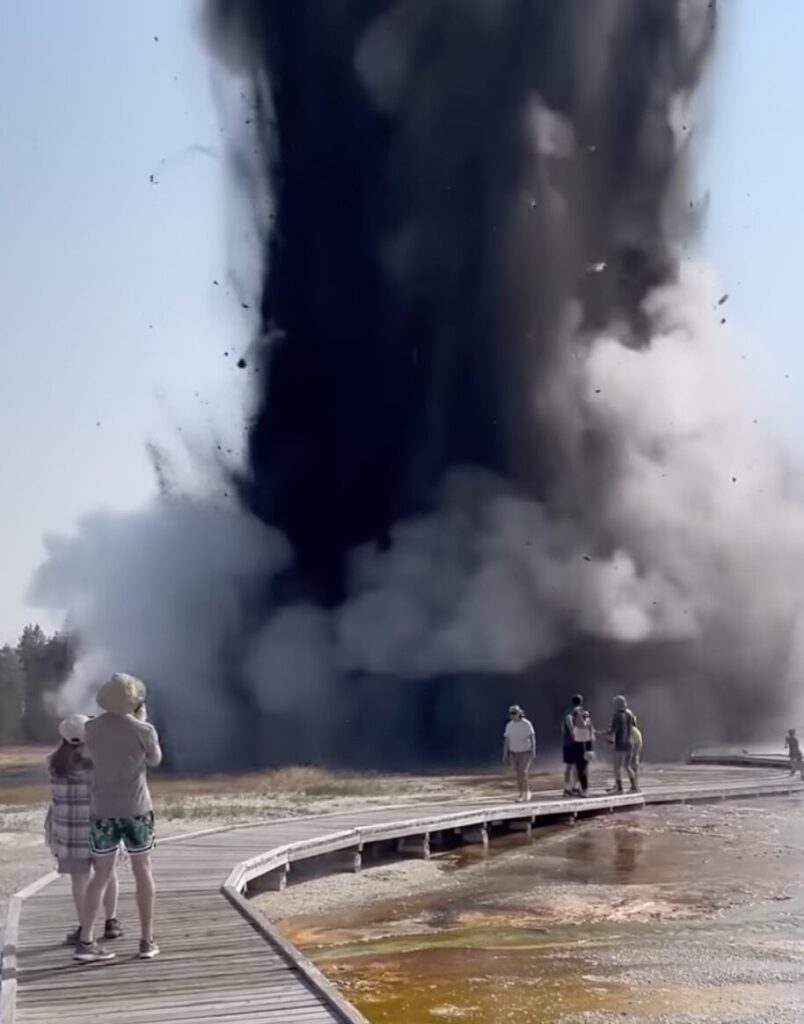
In 2024, a very large hydrothermal explosion happened, throwing water, mud, and large rocks (the largest almost 2 feet wide) up to 600 feet into the air. You may have seen video of the explosion (see an image from the video below), as it was widely viewed on social media at the time. As shown in the video, people were on the boardwalk at the time, and miraculously no one was injured. (I have heard that the NPS first learned about the explosion when muddy tourists started coming into the Old Faithful visitor center, asking where they could clean up. I don’t know for sure that this is true, but it makes a good story!)
Biscuit Basin was immediately closed, and has remained that way as geologists continue to monitor activity. Equipment, including cameras, was installed to keep tabs on the area. The basin will remain closed until it can be deemed to be safe to enter the area again.
The equipment has picked up multiple small eruptions in the area in the last two years, but on June 13, another hydrothermal explosion was detected. When geologists arrived on scene, they found that multiple new vents and a large crack had opened up just a little north of Black Diamond Pool.
Later, they returned to find a new pool had formed. In a spot where they had been walking two days before, the ground had collapsed into a boiling pit of water, opening up a pool 21 by 17 feet in size. (In case you ever wonder why you’re not allowed off the boardwalks in thermal areas, this is why!)
What is a hydrothermal explosion?
In Yellowstone, underground water can be heated very significantly. This is what powers geysers. Water is heated from underneath, and gets up to temperatures above boiling, but cannot actually turn into steam because of the pressure of cooler water above. Eventually, the water gets hot enough to overcome the pressure, and it flashes to steam, expanding suddenly. This pushes water out of the mouth of the geyser as if it were shot from a cannon, and the eruption continues until all the pressure has been released.
However, the same thing can happen in places where a geyser does not exist, so there’s no way to relieve the pressure. In many cases, the pressure never gets high enough for anything to happen, but sometimes things change. Perhaps the heat intensifies, or there’s an earthquake (even a small one), or something else happens. The result is that the pressure underneath exceeds the forces holding it in place, and suddenly water flashes to steam with nowhere to go. The result is an explosion, throwing everything above the steam into the air, much like exploding gunpowder in the confined space of a cannon pushes the cannonball out at high speed.
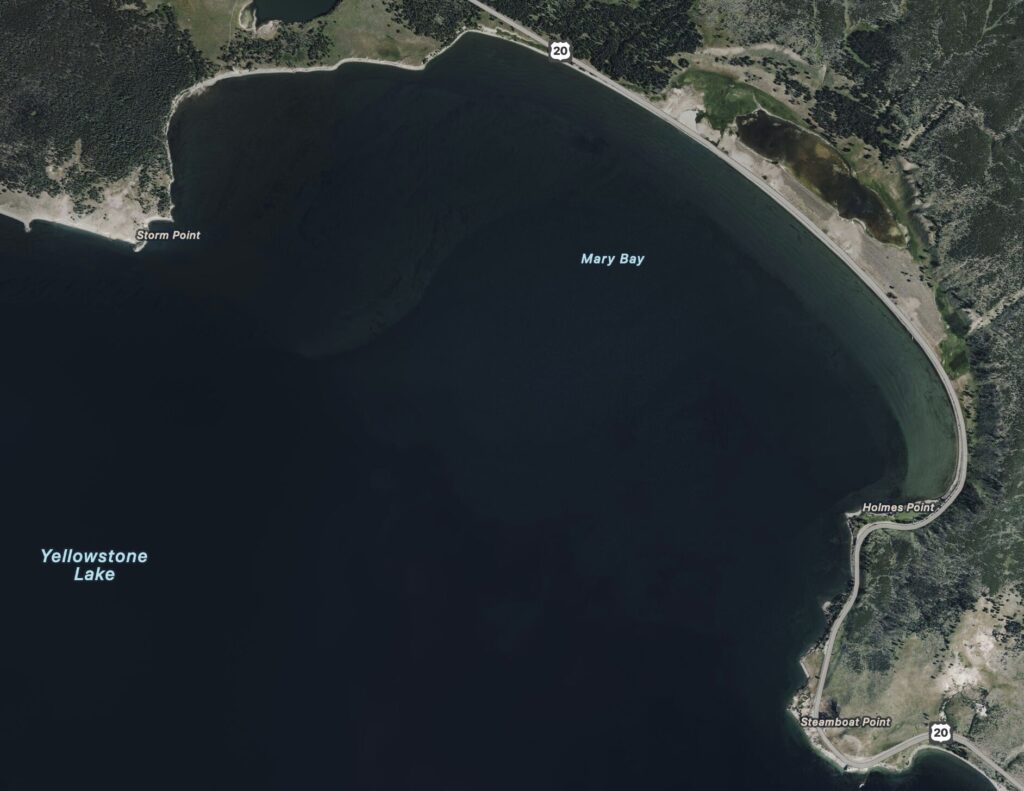
Yellowstone has a long history of hydrothermal explosions. Most are not significant, but the largest known hydrothermal explosion formed a 1.5 mile wide crater that is now known as Mary Bay, on the north side of Yellowstone Lake, around 13,800 years ago.
Is Yellowstone safe to visit?
This is the question folks are asking in the wake of Biscuit Basin’s antics. As far as I’m aware, there’s no record of anyone in Yellowstone being injured by a hydrothermal explosion, even though they’re fairly regular occurrences (mostly in the backcountry).
Still, when you’re walking around inside the 45×30 mile crater of an active volcano, you can’t rule out the possibility of something unexpected happening. However, statistically speaking, you’re far more likely to be injured by an animal, and even more likely to be injured by a vehicle. On the list of things you should worry about, and make an effort to avoid, in Yellowstone, hydrothermal explosions simply aren’t one of them.
This doesn’t mean thermal areas are safe, of course. If you go off the boardwalk, you could find yourself on thin ground that will collapse, dumping you into boiling water or releasing high-pressure steam. If you enter closed areas, such as Biscuit Basin, you could be injured by the dangerous activity in that area.
So follow the rules and enjoy the park! There’s nowhere else like it in the world.