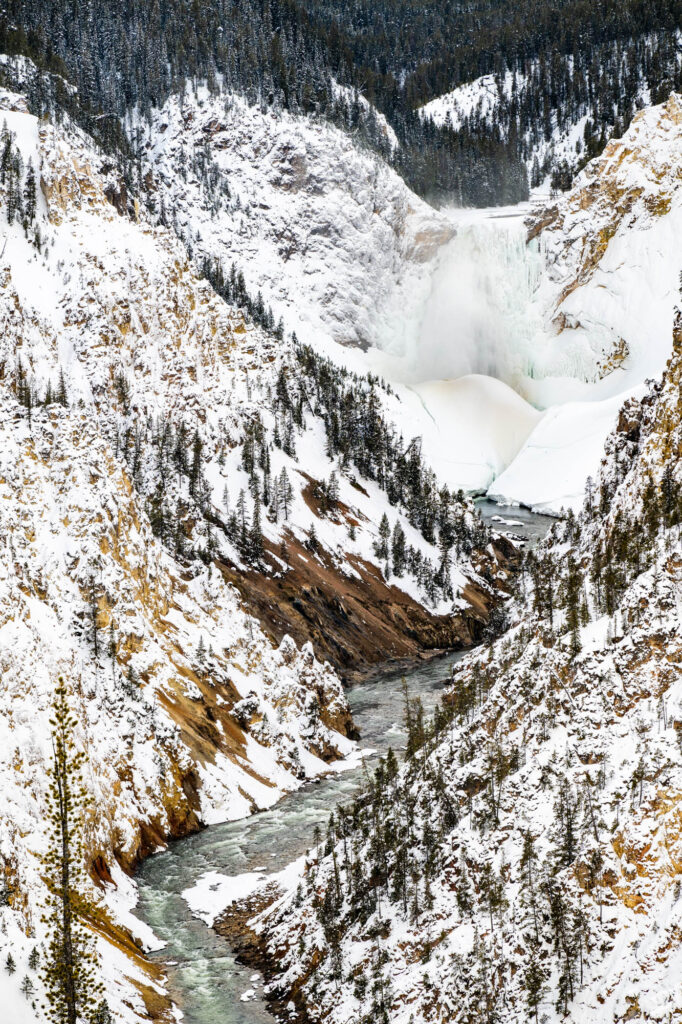
Yellowstone’s winter season extends from the beginning of November through mid-April. The park becomes blanketed in snow, with depth of snow varying by elevation and geography, and most of the amenities close. Areas of the park that are crowded in summer can feel isolated.
Snow and cold temperatures can extend beyond either end of the “winter season,” with early snows starting to fall in September and late spring squalls fall as late as June. According to locals, this area has three seasons: July, August, and winter! They’re not entirely wrong.
With weather making the start and end of winter vague, what truly defines the winter season is the time during which the majority of the park is closed to travel in personal vehicles. The only way to experience the closed areas is either under your own power (such as showshoeing or cross-country skiing) or on a snowmobile or snowcoach tour.
How can I enjoy the park?
Within the closed areas, you can book a tour. Snowmobile tours involve riding on a snowmobile (as you’d probably expect) and following a guide. You may not go off on your own. A tour in a snowcoach – a large van or mini bus with huge tires – will keep you warmer and protected from inclement weather, but may feel less adventurous.
Another option is to enter a snowmobile lottery the summer before. If you win, you will be able to be a “non-commercial guide.” This means you will get some training, then be allowed to bring in groups of people on snowmobiles, but you are not allowed to charge money. This essentially provides a way to come into the park in a “tour” and bring your family and friends along, but ensures that you will be familiar with the rules surrounding snowmobiling in the park.
Finally, you may have noticed that only most of the park is closed. The route from Gardiner to Cooke City – which runs through Mammoth, past Roosevelt Lodge (which is closed at this time of year), through Lamar Valley, and out the northeast entrance – is open to private vehicles year round, as it is the only way for residents of Silver Gate and Cooke City to go anywhere. This means you can drive in the park on your own, along that one route.
Isn’t winter just cold and unpleasant?
Not at all! Well, yes, of course it’s cold, but unpleasant couldn’t be further from the truth. If the beautiful snow-covered scenery doesn’t make for an amazing experience all by itself, the cold here never feels as cold as an equivalent temperature on the east coast of the US. A wet cold is far worse than the dry cold of the Yellowstone area.
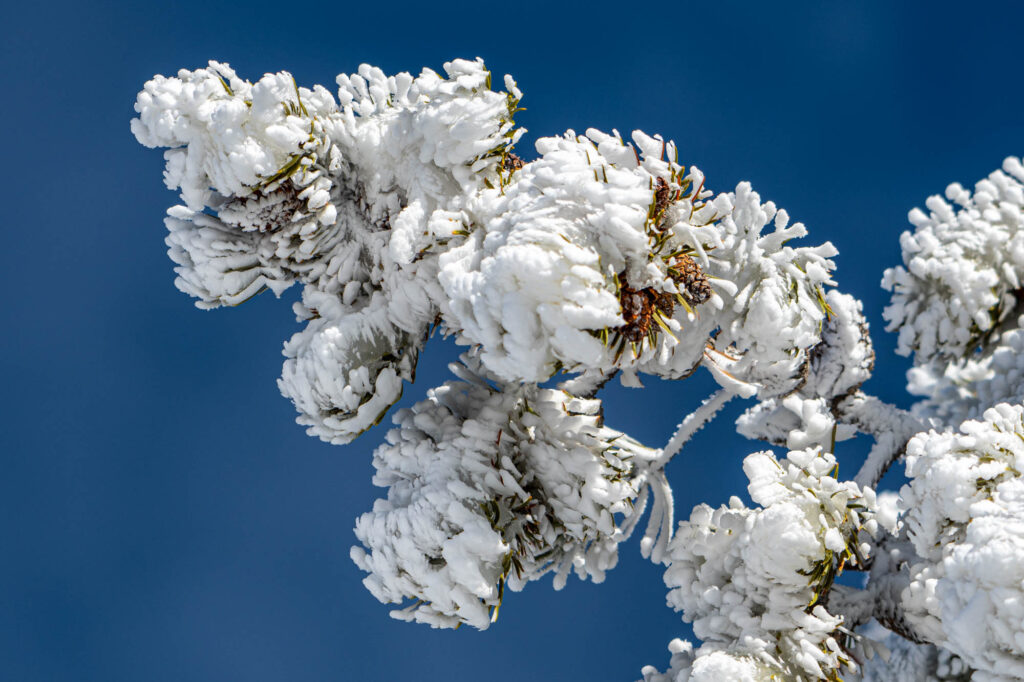
The heat of thermal features juxtaposed against the cold of winter creates all manner of drama, such as copious amounts of steam, sometimes even coalescing into a wall of patchy fog. In the right conditions, that steam condenses and freezes on trees, creating interesting ice.
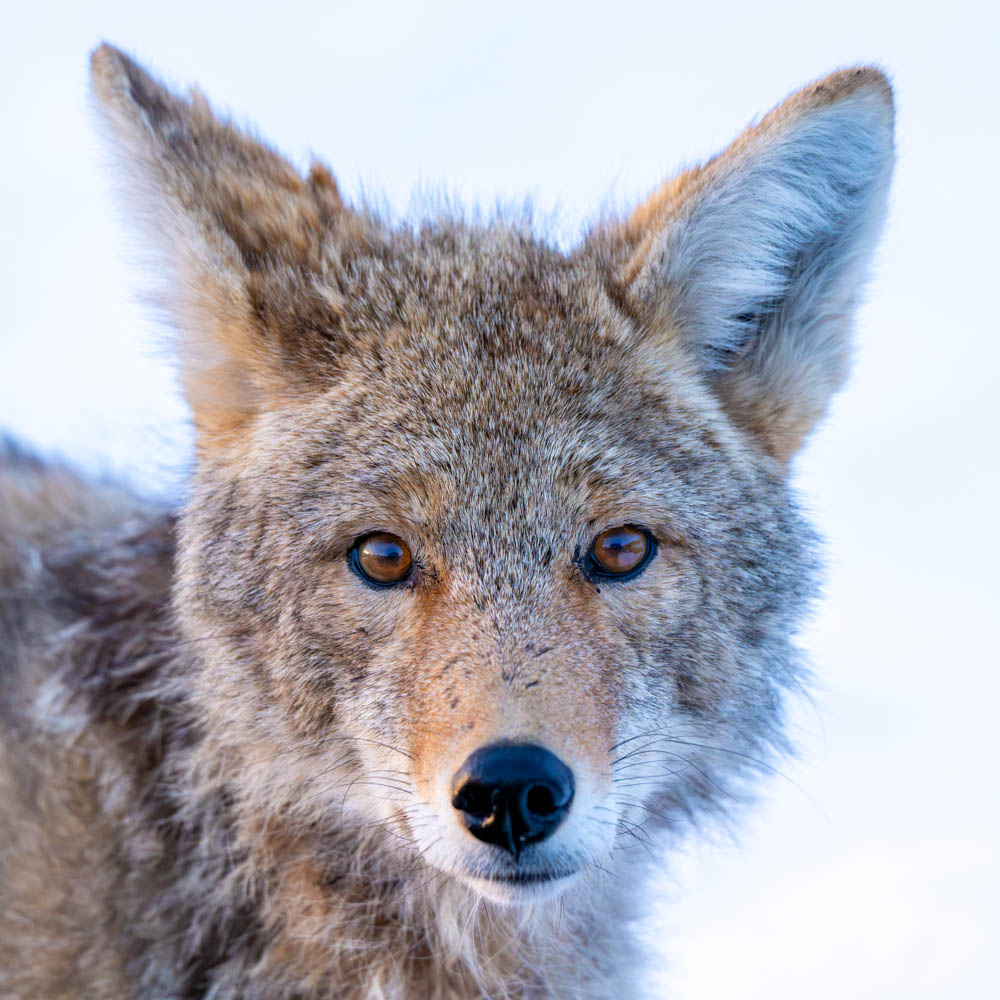
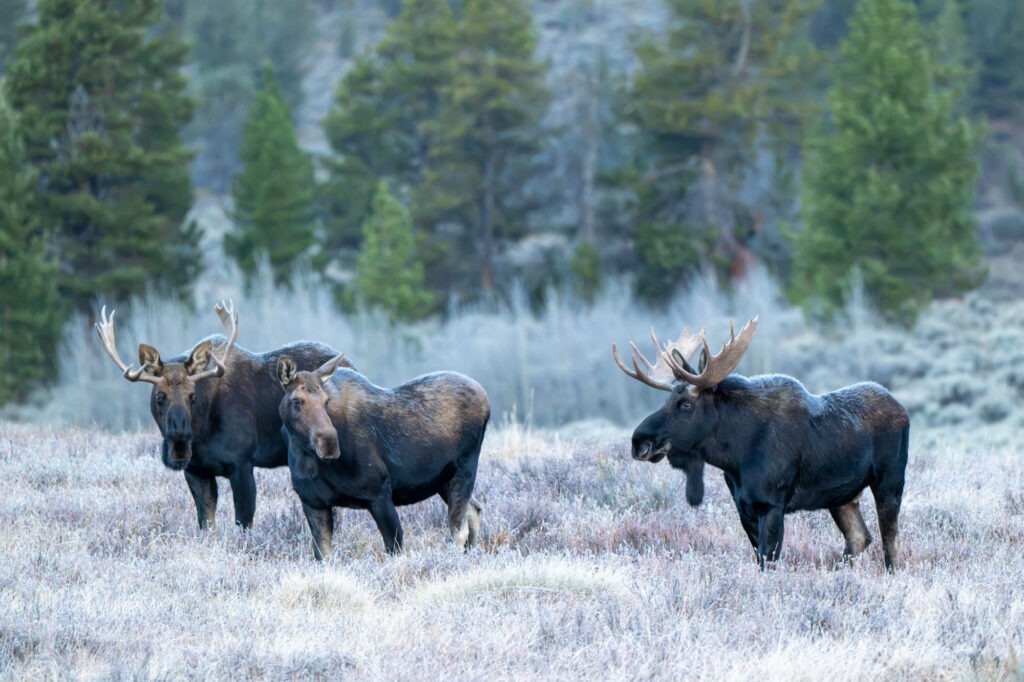
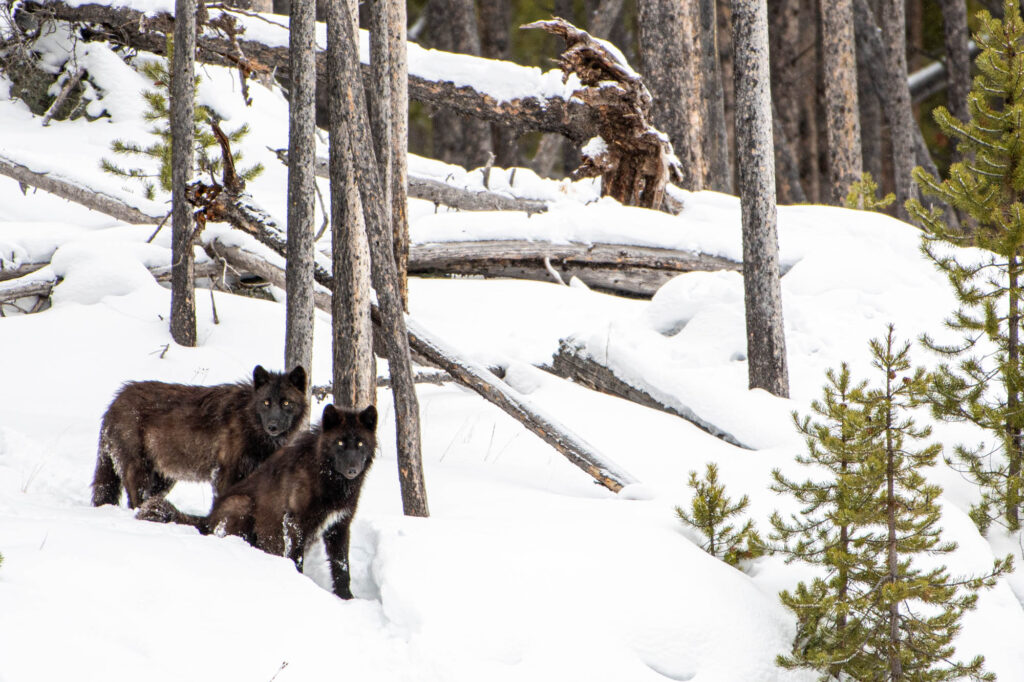
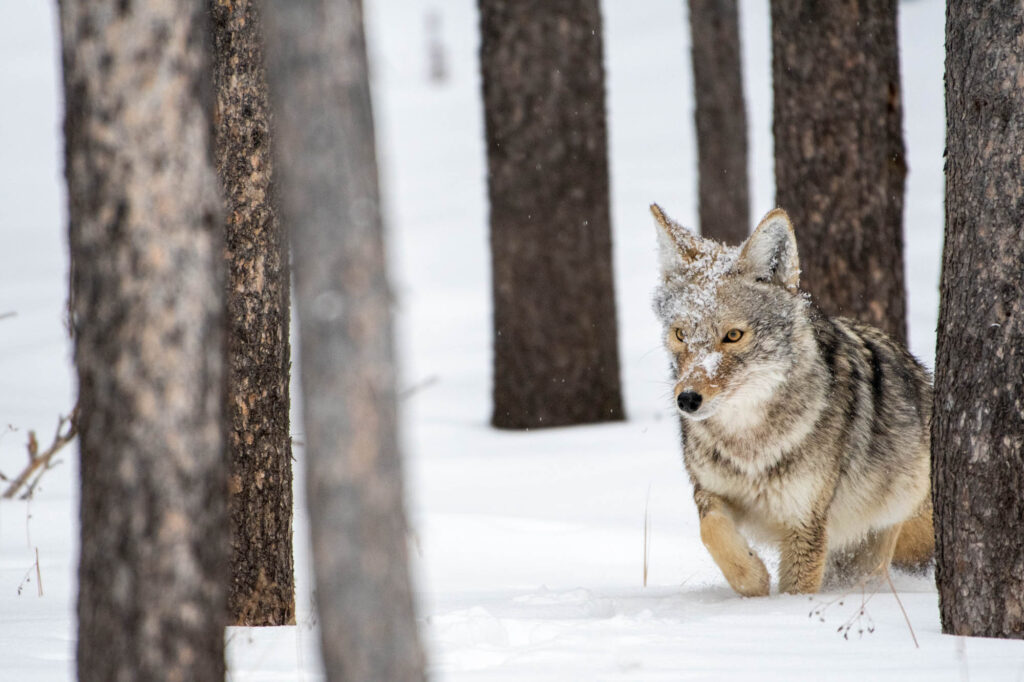
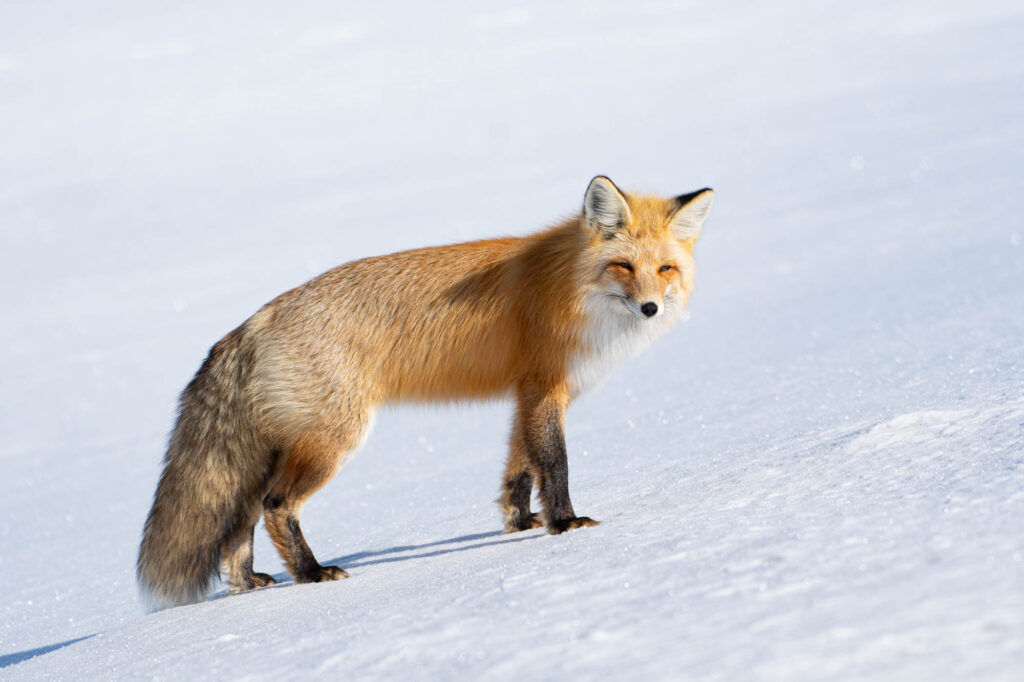
Best of all, snow makes wildlife much more visible! You won’t see bears, of course, as they’ll be hibernating, but there’s so much more to see. The canids of the park, in particular, are out and on display.
Where can I stay for a winter visit?
A good spot to stay for a self-guided winter visit would be Gardiner. It’s right outside the north gate, and you can drive in and enjoy the park’s northern range. If you’re willing to rough it a bit, there are places to stay in Silver Gate and Cooke City that put you in easy early morning reach of Lamar. The downside is no cell service, wifi that can barely exceed that of a 1990s modem, and few amenities, but to me that’s more than made up for by the quiet, remote location.
Inside the park, you can stay in the Mammoth Hotel or in the Old Faithful area’s Snow Lodge. (The latter can only be accessed via tour.) Everything else in the park is closed. You may need reservations a year in advance to stay at one of these!
Is there any downside?
Primarily, the weather. Snowmobile tours sell out, and have to be booked in advance, but the day of the tour there could be a blizzard or temperatures could be very cold. (I’ve seen as low as -35°F, or -37°C, but it doesn’t usually stay that cold for more than a day or two.) A snowcoach protects you more in transit, but bad weather could mean not seeing sights.
If you drive the northern range on your own, road conditions can be bad. Any day there could be icy patches in shady spots, and a snowstorm can make the whole route slippery, or even make the road itself hard to see. If you’ve got no snow driving experience, and are driving a rental vehicle with bad summer tires, you will want to be very cautious driving in the park, and should probably stay in – or book a tour – if a storm hits.
Is winter the best time to visit?
For me, winter is my favorite time in the park. However, it does pose challenges. Even for me, as a local, it can be hard to get into the park when I want to. Winter can provide significant rewards for a visit, but it also poses some risks. If you decide on a winter visit, be flexible and ready to change your plans if needed.
Leave a Reply