
People ask all the time if they need bear spray in Yellowstone, and I hear folks talk about how they fear bears to the point that they don’t want to go on any hikes. Sometimes people understand the need for bear spray in Yellowstone, but then question whether they need it outside the park. In all the online discussions I’ve seen, there’s a lot of confusion and misunderstanding.
So let’s dive in and talk about some of the points of confusion, to better understand these misunderstood animals. We’ll end with information on what to do if you should happen to cross paths with a bear on a walk or hike.
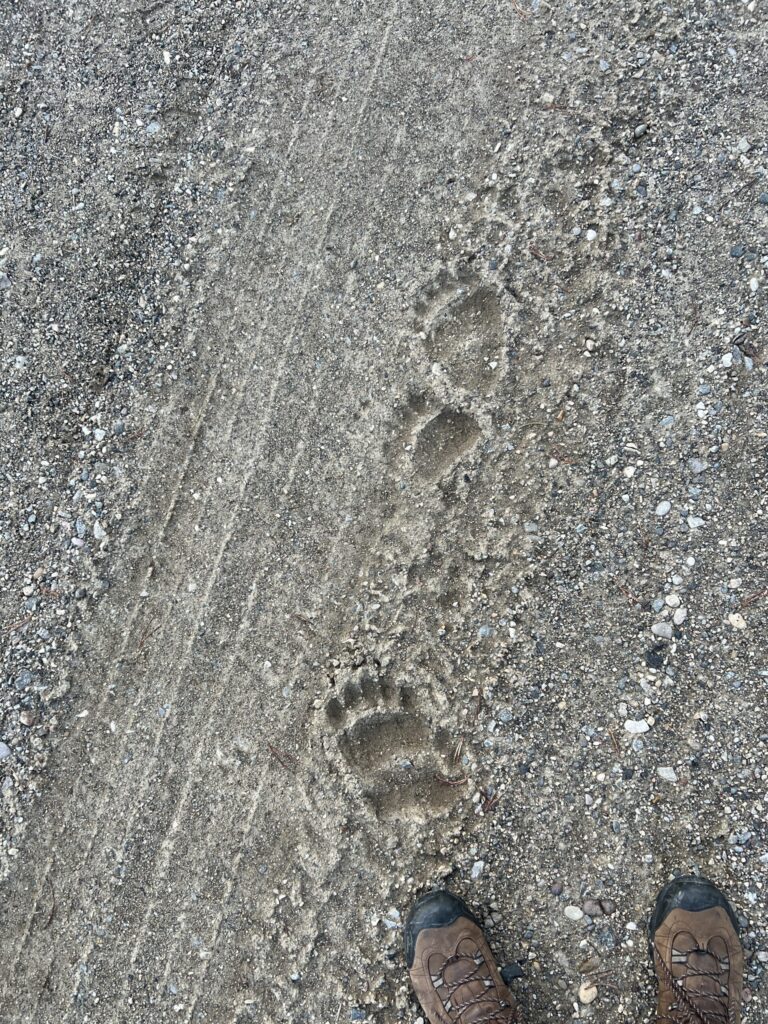
“It’s unlikely you’ll encounter a bear”
Despite the fact that people flock to Yellowstone to see bears, and most of the time do see them, I hear this frequently. Sometimes it feels as if people think the bears are placed along the road for their entertainment.
However, there is some truth to this statement. I lived in the mountains of Montana, just outside Yellowstone, for several years before I ran into a bear on the trail. I’d seen tracks – such as those shown in the photo above – and scat, but no bears. That can lead to some level of complacency.
The catch is, you could run into a bear any time. Last year, I ran into bears on the trail three times! Around here, you need to be ready to see a bear just stepping out your front door.
“Do bears go outside Yellowstone?”
Bears are not confined to Yellowstone. The Greater Yellowstone Ecosystem refers to Yellowstone, the Grand Tetons, and other surrounding lands that cover a large area and are home to all the same creatures you see inside Yellowstone. In addition to bears, you can see wolves, bison, elk, pronghorn, and more outside the park.
Case in point, this little bear cub, with its mother and a sibling, hung out by my house last summer. The photo below was taken with only a few feet and a window separating us.
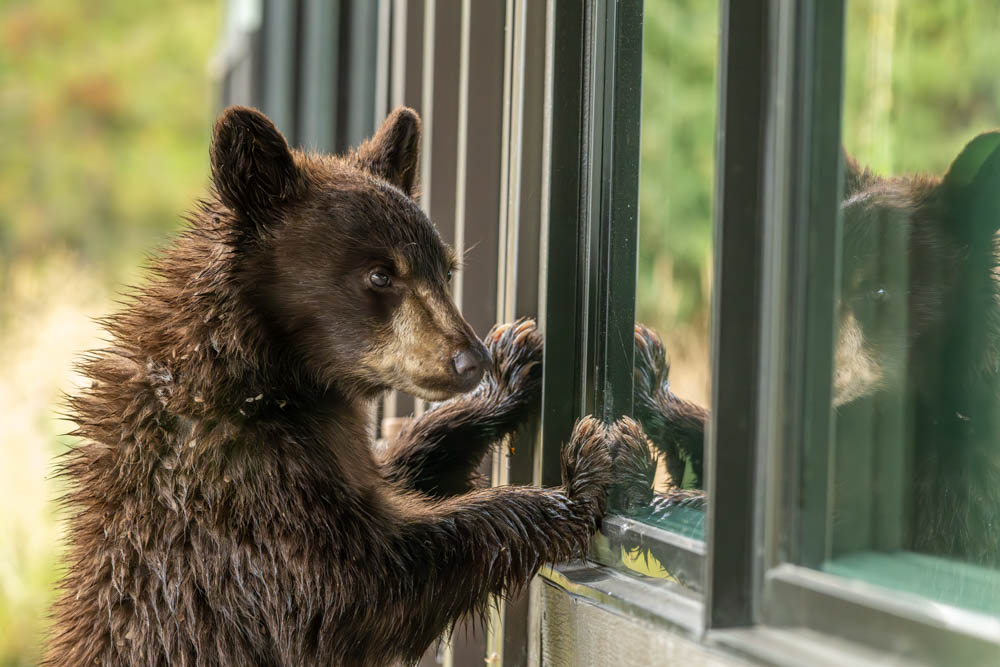
We live in the bears’ home, and it’s common to see them in what may seem like unlikely places. I’ve had neighbors step out the front door and see a bear less than 20 feet away. Caution is warranted everywhere.
“I don’t need bear spray, I’m not going into the backcountry”
Well, the photo above puts the lie to the idea that bears are only found in the backcountry. As does the fact that people commonly see bears next to the road in Yellowstone.
Admittedly, if you’re walking somewhere like the Grand Prismatic boardwalk in the middle of a bunch of people in the height of summer season, you’re very unlikely to have a run-in with a bear. But there are plenty of other times that you may be in less crowded areas where you could encounter a bear, such as a picnic site, an out-of-the-way vault toilet, an overlook in a less busy area, etc.
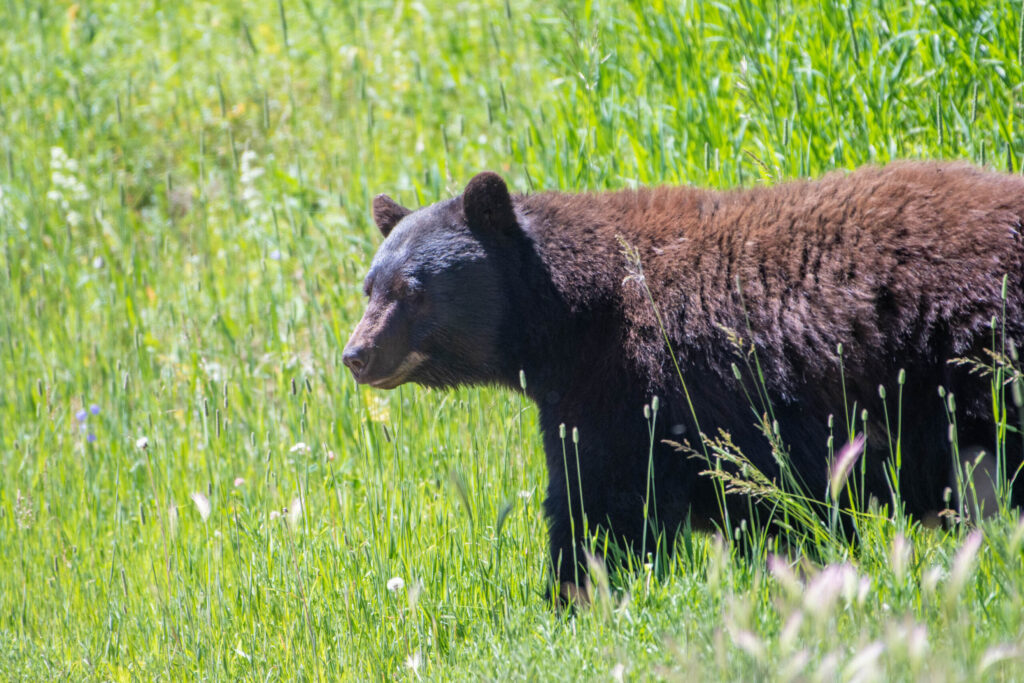
This means you often need bear spray when you don’t think you should. Just have it. It’s a minor precaution, and without it, you could face major consequences.
Keep the bear spray accessible. If you stow it inside your backpack, the bear isn’t going to wait for you to unpack it if it decides to attack.
How do I avoid a bear encounter?
First, follow a rule that I frequently break: don’t hike alone! Go in a group. The more the better. A bear is very unlikely to mess with a group of people.
Second, make noise while you walk. Don’t use something like bear bells, though. They make bears curious, and they may come to investigate. Your voice is the best thing you can use. If you’re alone, or too out of breath on a tough trail to maintain conversation, yell something periodically. (I’ve always yelled, “Hey, bear!”)
(By the way, don’t use music playing from a portable speaker as your noise. Although it will warn bears away, it will put you in more danger of attack from fellow hikers on the trail!)
Third, be aware of your surroundings. Do not wear headphones or ear buds, you need to hear. If you start to smell a carcass (a foul rotting meat smell), or hear crashing in the brush nearby, get out of there! The safest direction to go is back the way you came.
Fourth, pay attention to trail closures. If a trail is closed due to bear activity, don’t take chances. Find another trail.
I encountered a bear anyway, what now?
Maybe you didn’t follow the rules to a T, which has been the case every time I’ve encountered a bear. Or maybe you did, but it didn’t work (for example, maybe the bear was near a stream and didn’t hear you). So you’re facing a bear at far less distance than you’d prefer. What now?
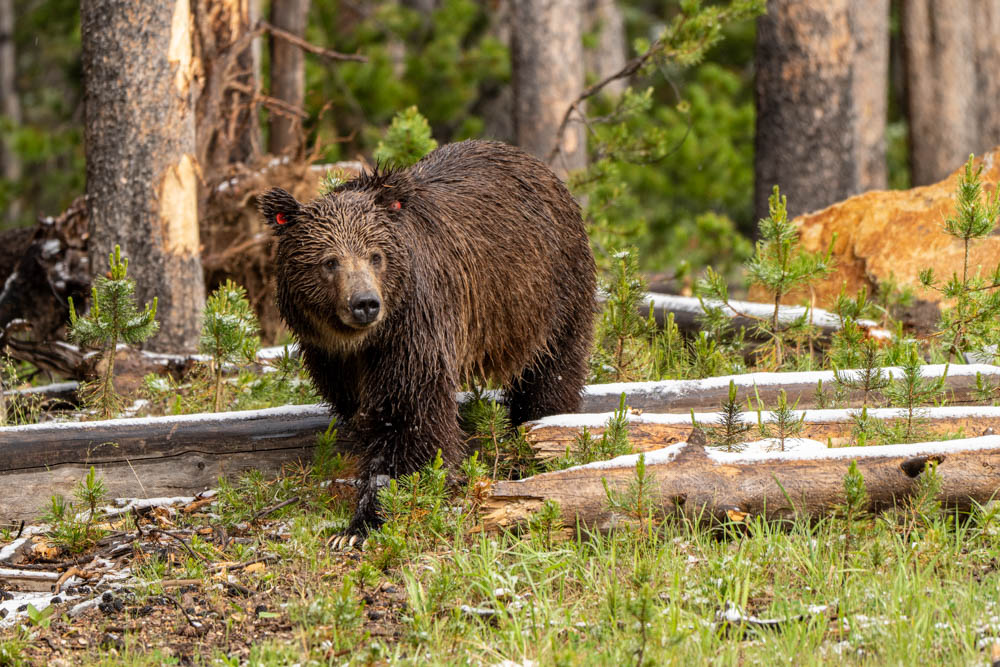
For the most part, bears really don’t want anything to do with humans. Their normal response is to either leave or ignore you. (The latter is mostly in the park, where bears are accustomed to people.)
However, there are a few reasons a bear may attack:
- It is defending a carcass that you got too close to
- It is defending cubs that you got too close to
- It was surprised by you
- You reacted poorly to the encounter
The first three can mostly be prevented by following recommendations for avoiding a bear encounter in the first place. The last one is the only thing that is in your control once you’re face-to-face with a bear, and it can literally mean the difference between life and death.
My recommendations are based on what has worked for me in bear encounters.
Ready your bear spray
Pull your bear spray from its holster, and remove the safety clip. Get it pointed at the bear with a finger on the trigger. (If the bear spray is in your backpack, or somewhere else not accessible, it’s too late! Don’t make this mistake, but if you do the remaining steps are even more critically important.)
You should be doing this at the same time as the other steps below. Don’t just stop and fumble with your bear spray, ignoring the other steps.
Move away
If you can, back slowly away from the bear. Don’t turn your back, and whatever you do don’t run! Be careful, though. You don’t want to make any sudden moves, and tumbling awkwardly backwards on uneven ground while backing away would qualify.
This is particularly important if the bear hasn’t seen you yet. Increase the distance as much as you can.
Whatever you do, DO NOT RUN! This can trigger a predator response.
Stay calm
You may have heard that you should yell and wave your arms. But in a situation where the bear is already anxious or upset, do you really want to escalate things by behaving aggressively?
Instead, no matter how hard your heart is beating and how much adrenaline is pumping into your blood, remain calm and still. Talk to the bear in a soothing voice. Think of the voice you might use to calm down a frightened toddler.
Spray the bear
If the bear charges or otherwise behaves aggressively, spray it. Spray low, and try to spread the cloud back and forth a bit. The idea is to create a wall of pain the bear will have to pass through. Don’t skimp, use the whole canister!
Leave the area
After you’ve sprayed a bear, and it has run off, you’re out of bear spray and should head out of the area. You don’t want to run into another bear on the trail, or the same bear again, with no bear spray.
You could carry a backup canister of spray in your pack and pull it out at this point, if you want to continue. However, beware of the area you sprayed on the way back. You don’t want to get exposed, and the smell could actually attract other bears. If in doubt, even with a backup can, leave.
If the spray doesn’t work
Conventional wisdom is to play dead if it’s a grizzly and fight back if it’s a black bear. If you can quickly and easily tell which it is in the heat of the moment, you’re better than me! I’d say do whatever feels right, and maybe judge more based on the bear’s size. Sorry, that’s not great advice, but options aren’t great at this point.
Be prepared and go on that hike!
To sum up, you’re very likely to be safe on the trail. I’ve done a lot of hikes here, and have rarely seen a bear. It’s not like they’re literally everywhere.
There are only one or two bear-related injuries per year in the park, out of millions of visitors, so your odds are good. Being prepared, being smart, and doing the right thing will further boost your chances.
So go on that hike and have a good time. There are amazing sights to see!