
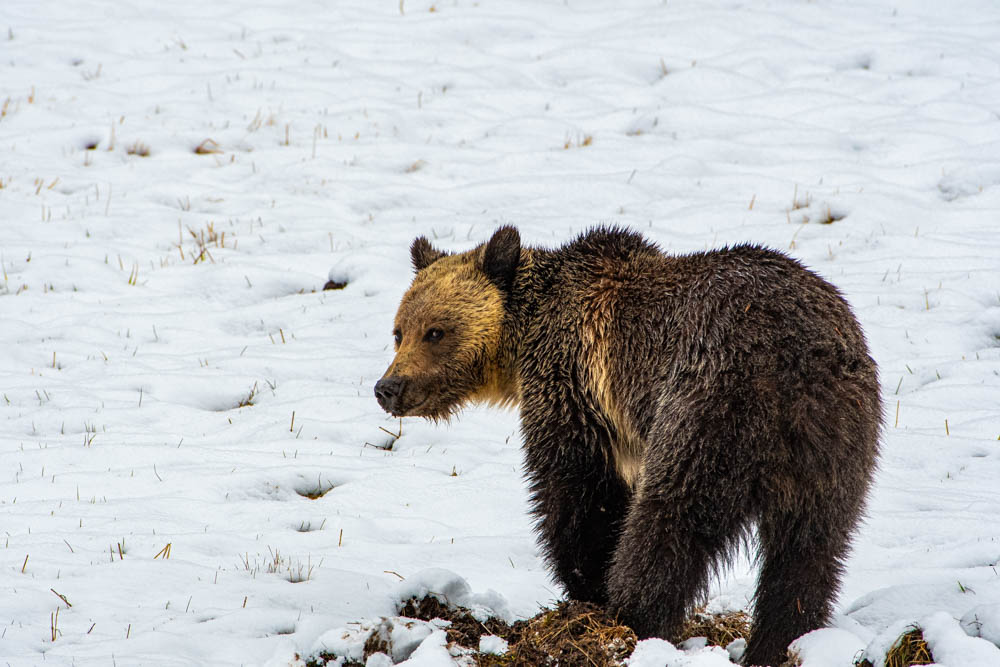
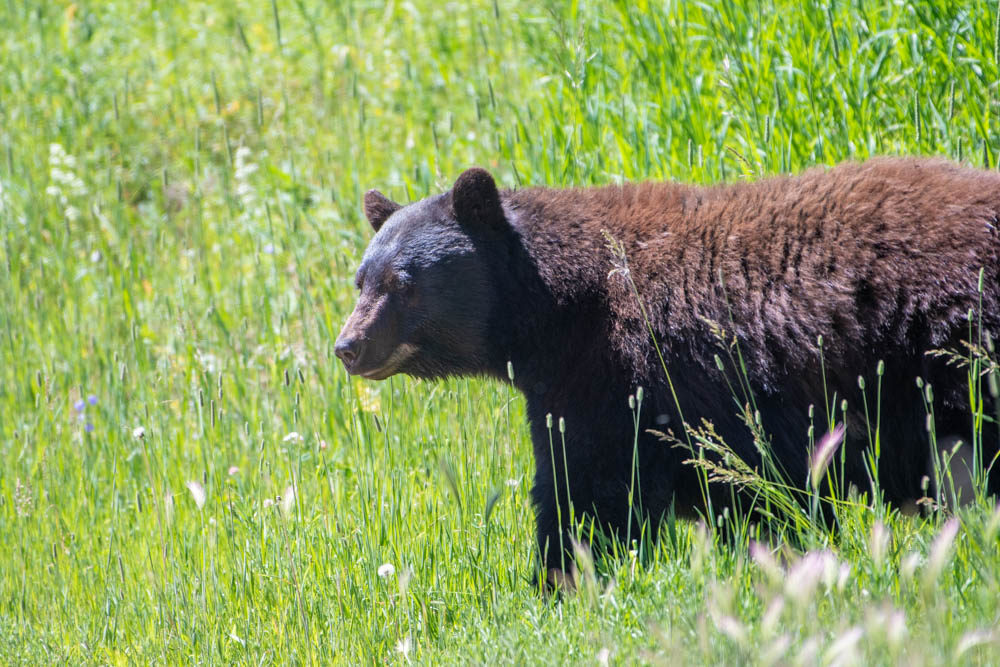
When people see a bear in the American west, there’s a lot of confusion about what kind of bear they’re seeing. People often make the mistake of thinking that any bear that is brown is a grizzly and any bear that is black is a black bear. However, there’s more to this than color. A grizzly can be black and a black bear can be brown (referred to as a cinnamon bear).
So how do you tell the difference? There are a number of different methods, though few are 100% foolproof. It often takes putting together multiple characteristics to come up with a definitive identification.
Grizzlies have a hump
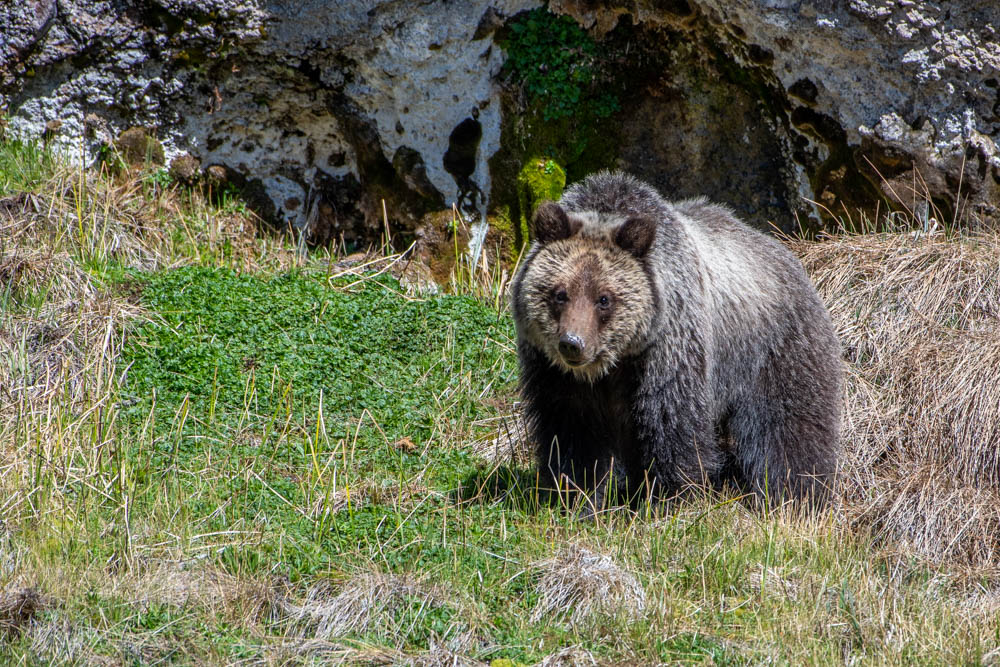
Grizzlies have a large hump of muscle above their shoulders. This is a common identifier, and is fairly reliable, as you can see from the photos below. However, the hump can be small in some grizzlies, and I’ve seen large black bears that appeared to have a hump. So don’t assume that a bear with a hump is a grizzly.
Rounded ears vs pointy ears
A common rule of thumb is that grizzlies have more rounded “Pooh bear” ears, while black bears have more pointy ears. This is true, though it’s a more subtle difference than it sounds like. Compare the ears in the images above, and you’ll notice it can be hard to tell a huge difference.
Face and snout shapes
Black bears have what seems to me to be a more dog-like face. It’s a bit narrower, with the forehead and snout making more of a straight line. Grizzlies, on the other hand, have what is often called a dish-like face. It’s more round, and there’s more of a curve between the forehead and snout. This can be a very subtle difference, though! I’ve seen large black bears with very round faces, and point of view makes a lot of difference.
Grizzlies have a backstrap
The “backstrap” is a patch of lighter colored fur directly behind the front legs. This is not particularly noticeable on all grizzlies, but is a pretty distinctive characteristic when you see it.
Claws
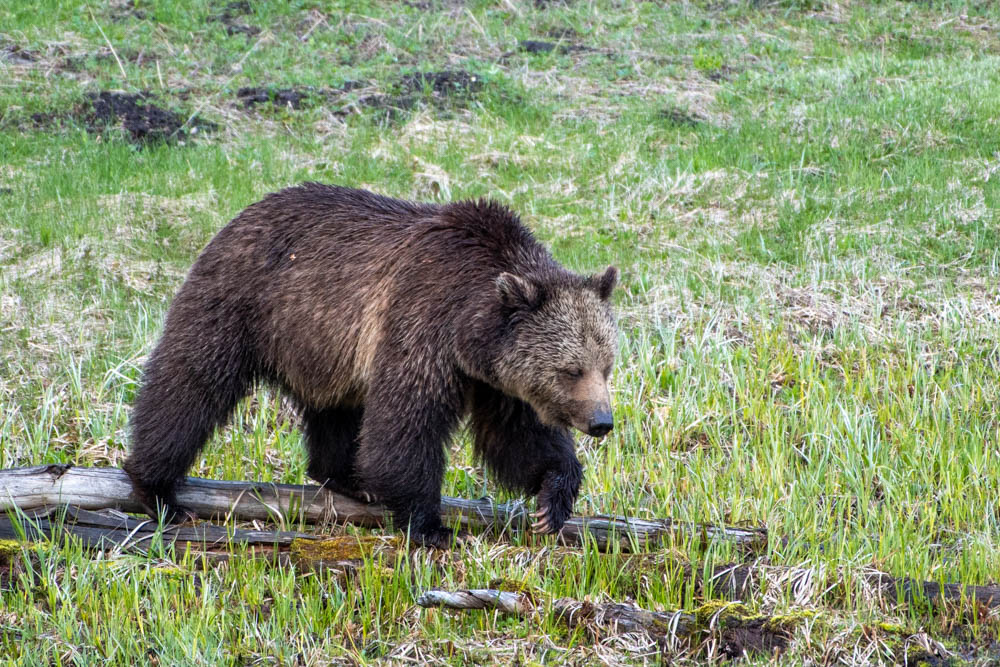
This is a pretty definitive difference, but you can’t always see the claws. In the case of a grizzly, claws are very long, and are used more for digging. If you can see the paws, you’re going to see the claws! For black bears, claws are shorter and more curved, not always easily visible and used frequently for climbing.
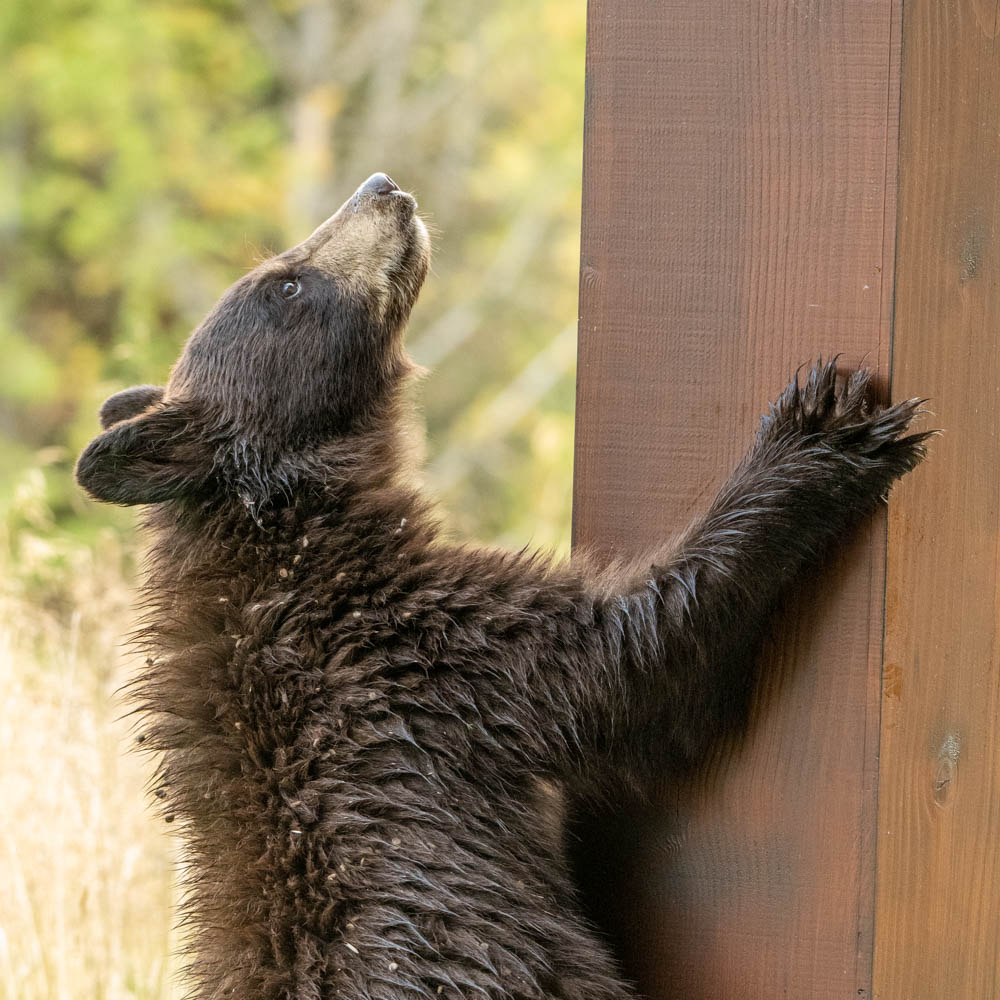
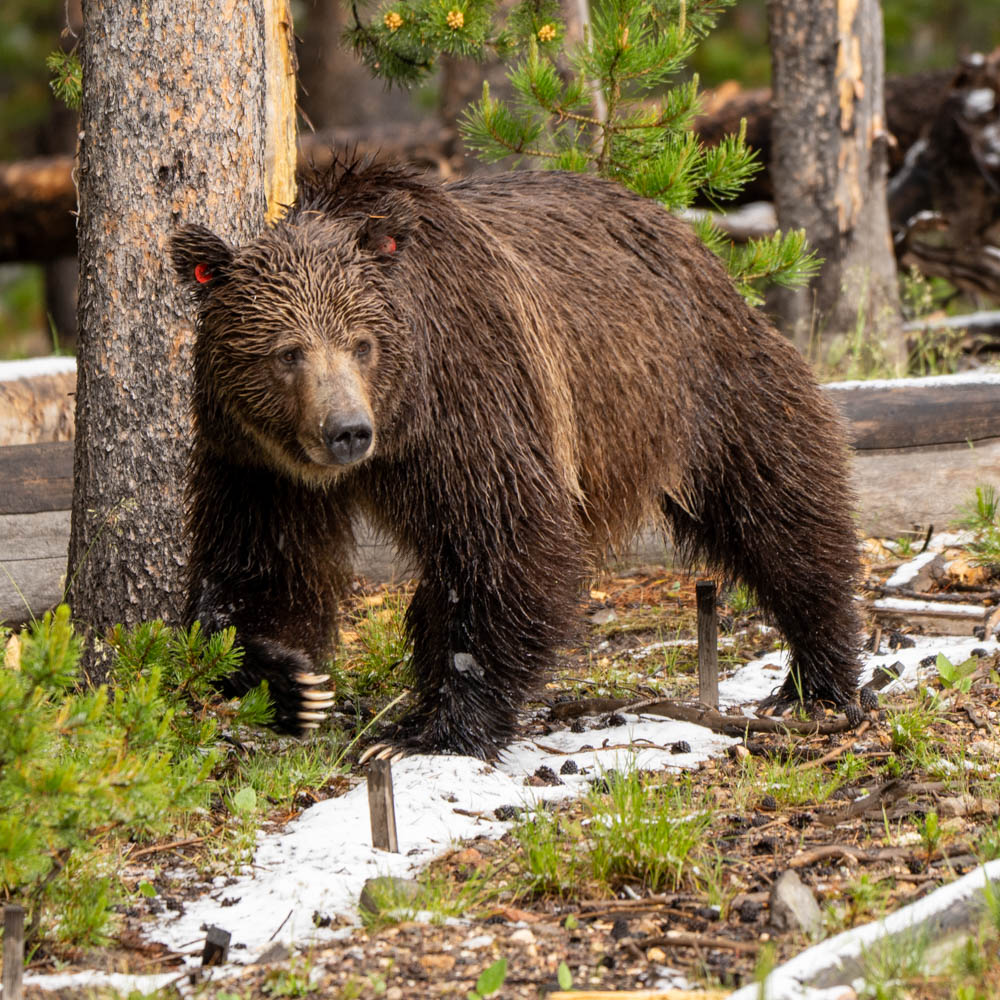
Put it into practice
Next time you see a bear, try to use these differences to figure out what you’re seeing. It’s not always easy in the field! Do your best to use two or more characteristics for a positive identification, though if you see the claws you won’t need any more than that.
When it comes to bear safe practices, one common piece of advice for handling a bear attack is, “If it’s brown, lie down, if it’s black, fight back.” There’s some truth to that, but by now, I’m sure you see the problem. Color is a poor identifier, and if you can put together an identification in the heat of the moment at close range, you’re a better person than I!